Green Overcommitment: Why Some Big Players Are Revamping Their Sustainability Goals
Over the past decade or so, corporate sustainability promises have surged, driven by a mix of investor pressure, consumer expectations, and a growing sense of climate urgency. These goals and the headlines they generated were often characterized by optimistic timelines and promises, some sweeping and some specific — “zero emissions by 2030”, “fully circular materials”, or “entirely renewable operations”. More recently, a different trend has quietly emerged: recalibration.
Companies are beginning to acknowledge that some of these goals were more aspirational than achievable.
While these shifts may be disappointing to some, it can also be viewed as a correction. The emotional urgency that led well-intentioned business leaders to jump ahead of raw material markets and technologies is being replaced by a more grounded, strategic mindset. So, while climate and environmental stewardship remain important, there is growing recognition that progress must be built on open-minded, long-term, and reality-based and market-based planning.
Heavy on Emotion, Light on Execution
The original set of sustainability targets often emerged from intense public and internal pressure to act on climate change. And the problems are real enough even if the mechanisms and pace of climate change are not completely understood. Many companies made their pledges largely based on sending a positive message and are now seizing the opportunity to adapt to new learning about operational feasibility, infrastructure availability, and even climate reality.
For example, some organizations promised net-zero emissions or fully circular materials usage without clear plans for how to measure, verify, or resource those efforts. As these companies entered implementation phases, they encountered challenges: limited availability of alternative materials, weak emissions tracking systems, or supply chains not yet able to support the transition. But the “Lessons Learned” from unexpected outcomes and challenges are now helping form new plans based on deeper knowledge and with ever greater chances for success.
Corporate Course Corrections
A number of companies have adjusted their environmental goals in order to maximize both chances of success and positive environmental impacts. These are not rejections of sustainability as a corporate value but rather signs of learning, organizational maturity, and hopefully increased transparency. This link will take you a small sample of the significant adjustments made by major corporations: https://newclimate.org/sites/default/files/2023-04/NewClimate_CorporateClimateResponsibilityMonitor2023_Feb23.pdf
These revisions reflect a deeper insight: that credibility is earned through evidence, not aspiration.
Losing the Market through Claim Fatigue
There has been a significant loss of public trust over high-profile greenwashing cases like so-called Dieselgate. But for companies willing to be realistic and transparent, this trust gap represents a massive opportunity.
Consumers may be jaded right now, but they want to believe. Companies able to connect to them through plain talk, humility, and changes that are within the company’s control can build a strong bond of trust, leading to brand loyalty and a willingness by consumers to pay a premium for more sustainable alternatives.
The better way: Realistic, Transparent, Science-Backed Goals
1. Start with science and operational limits: Ensure that sustainability targets align with how you do business, things your business can influence and measure. Meanwhile, be careful to differentiate between activists and experts – they can sound very similar! Work backward from lifecycle analysis and emissions factors if you can, but don’t let measurement challenges frustrate – any measurement is better than no measurement.
2. Create graduated targets and leave room to adapt: Outline goals over multiple time horizons to serve as stepping stones to longer-term ambitions. Allow for both internal learning and, just as important, advances in scientific knowledge and technology. 65 years ago pregnant smokers thought nothing of lighting up, now mothers-to-be won’t be in a room with smokers. More recently, in 2000 gene editing was science fiction, and now CRISPR has made it an urgent topic of moral and ethical debates. It’s important to realize that nobody knows the future. Society can commit to the best strategy and technology that exists today, but should also always be open and scanning for advances.
3. Benchmark against actual performance: Your company is unique, so don’t simply adapt the goals of Google or another famously eco-aware giant. By all means benchmark, and do so with companies in similar or adjacent sectors and verticals. Meanwhile, always stay aware of what your company can measure and influence.
4. Assign ownership and accountability: Identify which departments own data gathering, compliance, and reporting. If the person who cares is not the person who handles the data every day, analysis and reporting can quickly become a quarterly slog or worse, a fight. Solve that problem up front, and it might go without saying, but get cross-functional executive buy-in so it sticks.
5. Be transparent and humble: Consumers will tolerate evolution and learning. Silence or spin, not so much. The key is to be humble. Be confident in your plans, but always mindful that even sustainability experts are figuring this out as science learns. You may need to adapt in a year based on new knowledge, and you should be prepared to communicate that change with the same confident humility.
Sustainability is a tough problem, and despite scientific advances, still not well understood. The recalibration of corporate goals isn’t a step backward. Instead, it shows that companies are learning to navigate complex environmental systems with the same rigor applied to finance and logistics.
Emotion played a role in awakening global consciousness to climate risk — and that awareness is important. But progress doesn’t come from panic, it comes from resolve. If businesses want to lead the transition to a sustainable economy, they need strategies rooted in science, economics, and trust. Overcommitment undermines all three. It’s time to trade-in the megaphone for the measuring stick — to make environmental progress that both lasts and provides growth for the companies that do it well.
The content of this blog is editorial and reflects the opinions of the author. It is intended to share perspectives on corporate sustainability trends and should not be construed as legal, investment, or business advice. Readers are encouraged to consult qualified professionals before making decisions based on the information provided.
More Articles
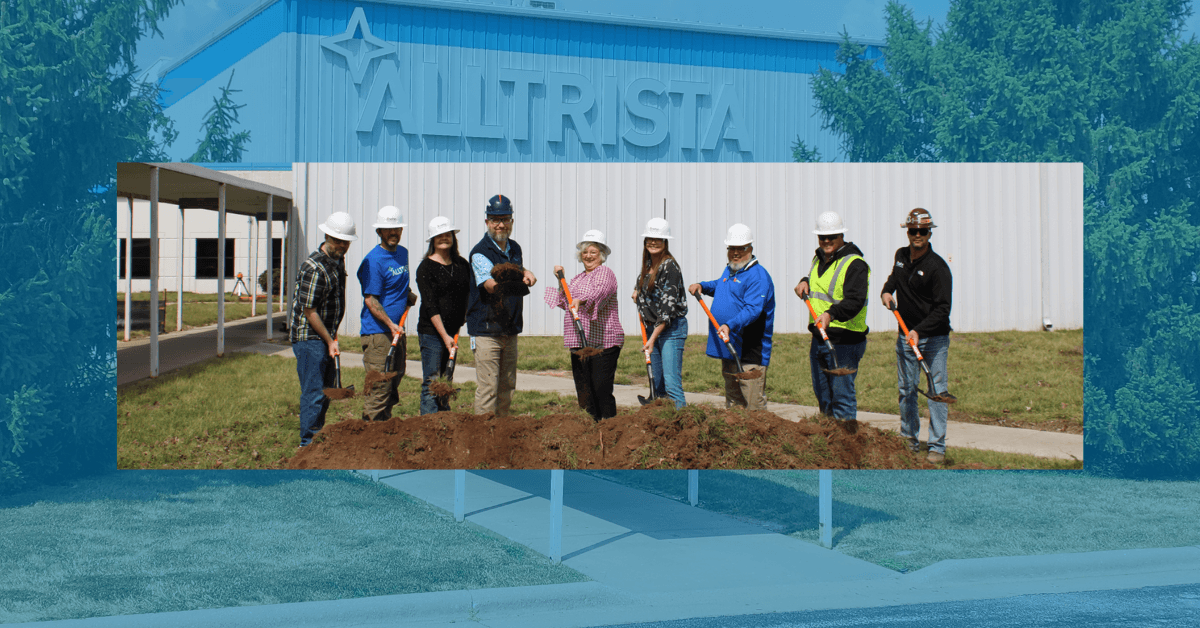
Springfield Facility Expansion Marks Key Growth Milestone for Alltrista
Alltrista Plastics LLC, a subsidiary of Jadex Inc., announced a 25,000-square-foot expansion of its Springfield, Missouri, facility, set for completion in September 2026. The investment will create new jobs, increase production capacity, and establish the site as a center of excellence for compression blow forming technology, supporting growth in both medical and consumer packaging markets.
Read More
Injection Molded Plastic in Healthcare: How Plastic Medical Supplies Support Improved Outcomes
Injection molded plastics play a critical role in modern healthcare by enabling safe, consistent, and cost-effective medical supplies. This article explores how plastic materials support better patient outcomes and innovation in medical devices.
Read More
Circular by Nature: Why Your Everyday Choices Matter - Now More Than Ever
A circular economy aims to reduce waste by keeping products and materials in use for as long as possible. Learn how everyday decisions, including choosing recyclable or compostable products, can help support sustainability.
Read MoreBiodegradable vs. Compostable - What’s the Real Difference and Why Does It Matter?
While all compostable products are biodegradable, the terms are not interchangeable. Compostable items are a regulated subset that must break down within a specific timeframe under controlled, aerobic conditions to produce nutrient-rich soil. This distinction is critical for infrastructure, as anaerobic decomposition in landfills produces methane, a potent greenhouse gas. The FTC’s Green Guides ensure manufacturers provide clear, verifiable evidence for all environmental claims to protect consumers from confusion and greenwashing.
Read MoreChild-Resistant Closures: How Do They Work and Where Can You Use Them?
Child-Resistant Closures (CRCs) are a vital safety feature mandated by the CPSC under the Poison Prevention Packaging Act (PPPA) for dozens of hazardous products, including prescription medication, household cleaners, and cannabis products. These closures require a minimum of two motions to open, like the common "push down and turn" mechanism, making them difficult for children under five to access quickly, while remaining easy for adults.
Read More