Product Development – 5 Resources You Need To Build A New Product
October 17, 2025 • 5 min read
It takes a lot to bring a new product to life. Whether you’re building something entirely from scratch or simply tweaking an existing concept, the product development process rarely leaves room for cost overruns or design errors. Even the smallest parts need to be designed with the utmost attention to detail to make sure that operations run smoothly and customers keep coming back.
What’s more, product development in plastic manufacturing requires a level of expertise, resources, and compliance standards that many businesses don’t have at their own disposal. To bridge that gap, companies can partner with full-service plastic manufacturers to take their ideas from concept to commercialization.
5 Product Development Resources Businesses Should Look For
When it comes to finding the right product development partner, there are several capabilities you’ll want to consider, including:
Program Management
There’s more to materials science engineering than manufacturing the final product. A lot goes on behind the scenes in product development to ensure that designs are not only viable but can be created consistently, on time, and on budget.
A strong program management team understands the plastics manufacturing process from start to finish. No matter what stage of product development you’re in, they’ll work with your company to set goals, allocate resources, and keep the project moving forward. This extra level of collaboration makes it easier to stay nimble and proactively respond to changes as they happen to keep projects from getting derailed.
Above all, the program management process establishes a clear plan with an established coordinator in place, so projects can avoid unnecessary risks and costs along the way.
Design
Along with program management to set the plan, you’ll also need design resources to build a new product. From sketching and rendering to 3D printing and prototypes, design capabilities like these are a must in plastics manufacturing, where seemingly small changes can have an outsized impact on the end-product’s quality, efficacy, and cost to produce.
During the initial design process, designers will begin by studying both the problems that your team is trying to solve and the functional needs your product must meet. For injection molded plastic projects, designers will carefully consider things like:
- Part complexity
- Material selection
- Texture and surface
- Moldability
- Assembly needs
This information allows design teams to draft concepts that not only fit your business’s unique needs but also eliminate waste once production starts.
Prototype Tooling
Once a design has been drafted, it’s time to test how sound that design is. Rapid prototype tooling allows companies to create custom plastic molding prototypes without long lead times. For example, you might need a custom molded part to support a new medical device. Through rapid prototype tooling, it is possible to create a sample of a production-quality part using the same materials chosen during the project planning stage.
By prototyping designs this way, companies can get a better idea of exactly how each part will function and easily see where design improvements or changes need to be made. It’s not uncommon for parts to need multiple changes before they’re ready for production. Through rapid prototype tooling, businesses can iterate as many times as needed in order to limit manufacturing delays and errors.
Testing & Quality Control
Even after prototyping is finished and a final design has been selected, that design must be tested in real-world conditions. By testing products in multiple different settings, teams can have full confidence that their final product will work as intended.
Before sending off design plans to the production line, quality control tests will ensure that machine parts can produce each part in a replicable, time-efficient manner. Next, the final part design will be quality control tested.
Plastic manufacturing testing can include:
- Drop tower and pendulum impact testing
- Friction testing
- Thermal testing
- Thickness testing
- Melt flow testing
- Tensile testing
Depending on the product being developed, multiple types of testing may be required before the final design is ready for production, and partnering with the right plastic manufacturer can help expedite this process.
Commercialization
The last stage of product development is commercialization, where the final product is brought to market. At this point, your product development partner can work with you to find your target audience, refine your product’s value proposition, and choose the right distribution channels.
After the product has been released, your partner will review the program results and suggest improvements for future projects.
Alltrista - Your Concept to Commercialization Partner
You don’t have to go all-in on product development alone. Alltrista’s expert plastics manufacturers help speed up the product development process so you can move from concept to commercialization faster.
From research and design to rapid prototyping, the New Product Introduction from Alltrista provides a phase-gate process to bring virtually any vision to life. Reach out today to see how Alltrista can keep your next project on time and on budget.
More Articles
Springfield Facility Expansion Marks Key Growth Milestone for Alltrista
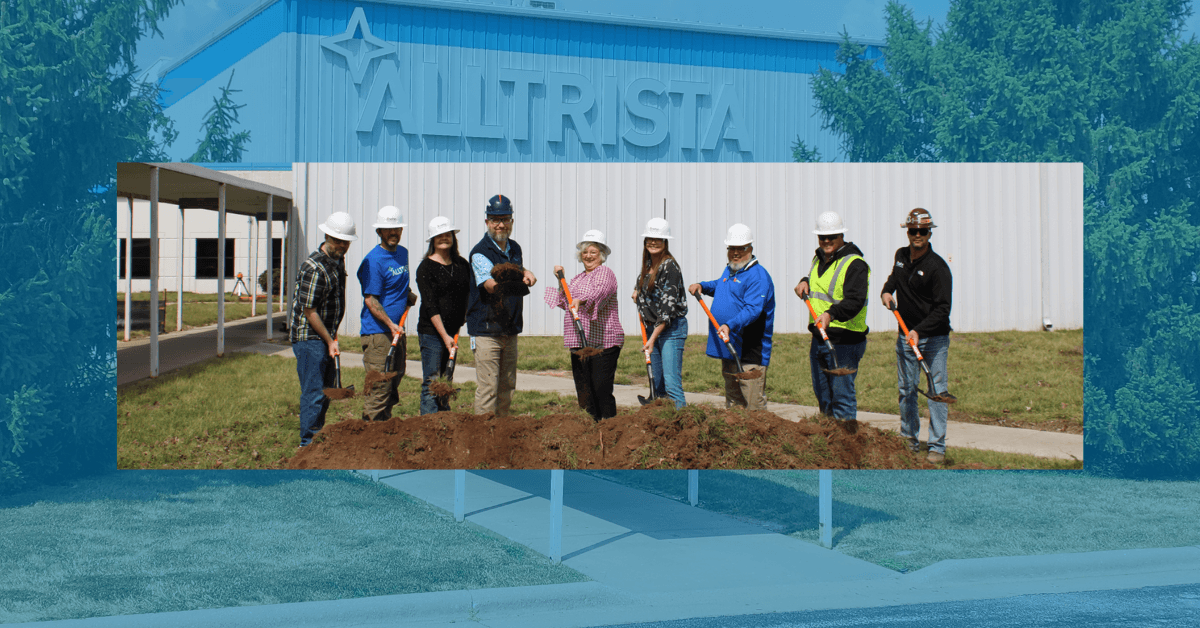
Alltrista Plastics LLC, a subsidiary of Jadex Inc., announced a 25,000-square-foot expansion of its Springfield, Missouri, facility, set for completion in September 2026. The investment will create new jobs, increase production capacity, and establish the site as a center of excellence for compression blow forming technology, supporting growth in both medical and consumer packaging markets.
Read More
Injection Molded Plastic in Healthcare: How Plastic Medical Supplies Support Improved Outcomes
Injection molded plastics play a critical role in modern healthcare by enabling safe, consistent, and cost-effective medical supplies. This article explores how plastic materials support better patient outcomes and innovation in medical devices.
Read More
Circular by Nature: Why Your Everyday Choices Matter - Now More Than Ever
A circular economy aims to reduce waste by keeping products and materials in use for as long as possible. Learn how everyday decisions, including choosing recyclable or compostable products, can help support sustainability.
Read MoreBiodegradable vs. Compostable - What’s the Real Difference and Why Does It Matter?
While all compostable products are biodegradable, the terms are not interchangeable. Compostable items are a regulated subset that must break down within a specific timeframe under controlled, aerobic conditions to produce nutrient-rich soil. This distinction is critical for infrastructure, as anaerobic decomposition in landfills produces methane, a potent greenhouse gas. The FTC’s Green Guides ensure manufacturers provide clear, verifiable evidence for all environmental claims to protect consumers from confusion and greenwashing.
Read MoreChild-Resistant Closures: How Do They Work and Where Can You Use Them?
Child-Resistant Closures (CRCs) are a vital safety feature mandated by the CPSC under the Poison Prevention Packaging Act (PPPA) for dozens of hazardous products, including prescription medication, household cleaners, and cannabis products. These closures require a minimum of two motions to open, like the common "push down and turn" mechanism, making them difficult for children under five to access quickly, while remaining easy for adults.
Read More